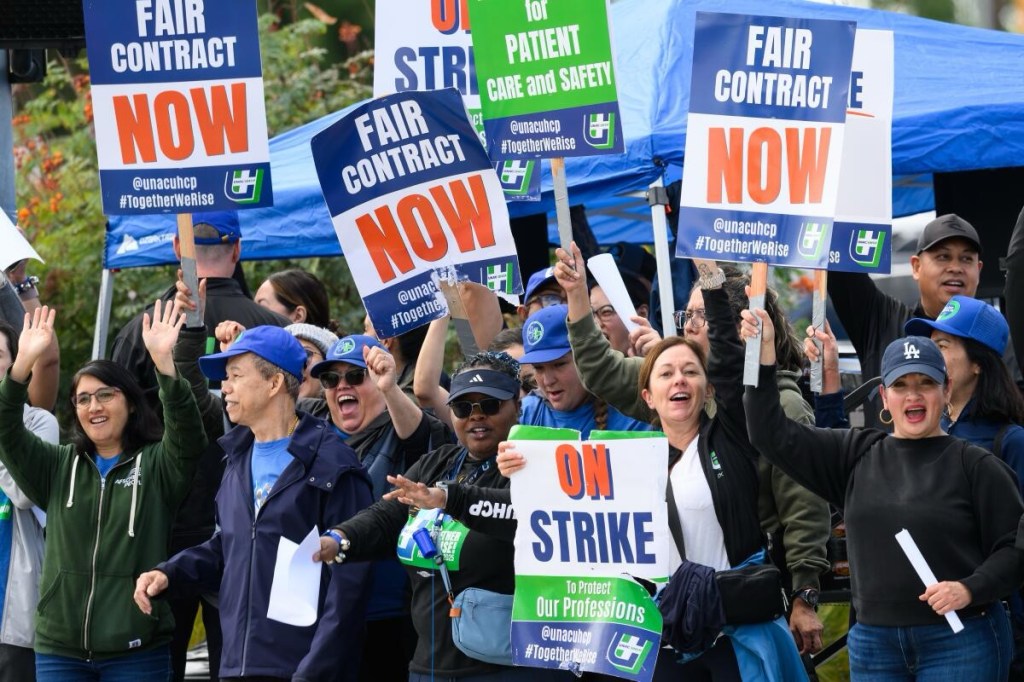
Sometimes, I sit back and think — is this really what healthcare has come to? I mean, we’re supposed to be in the business of healing, not hustling to survive in the very system that preaches compassion. Hi, I’m Tina — and if you’ve been anywhere near a hospital hallway lately, you’ve probably heard the whispers (or the chants outside): the Kaiser Permanente strike.
It’s not just another labor dispute. It’s a story about priorities, people, and the painful irony of a healthcare giant that can spend millions on shiny new buildings but can’t seem to find the funds to pay the very people who keep those buildings running.
The Reality Behind the Strike
Let’s get real for a second. Over 31,000 Kaiser Permanente workers — nurses, medical assistants, technicians, and more — are on strike. That’s not a small number. That’s an entire community of caregivers saying, “Enough is enough.”
And while these staff members are out on the picket lines fighting for fair wages, better staffing, and safer conditions, Kaiser somehow managed to hire 7,600 temporary nurses and staff to fill in. Many of them are actually former Kaiser employees who left for better pay elsewhere.
Now, let’s pause and think about that.
If Kaiser can afford to bring in thousands of temporary workers — and pay them more than their current employees — why can’t they afford to give their loyal staff the raises and support they deserve?
The Logic (and the Irony)
Here’s where it gets hard to swallow. Kaiser Permanente isn’t broke. Far from it.
They have the money to:
- Pay their CEO over $15 million a year.
- Fund massive construction projects and new facilities.
- Bring in thousands of temporary workers at premium rates.
But when it comes to increasing wages for the people who have been there through pandemics, staffing shortages, and burnout — suddenly, the budget’s “tight.”
It’s like watching someone buy a brand-new car while telling their kids they can’t afford groceries. The math doesn’t add up, and the message is loud and clear: profits over people.
The Human Side of the Story
This isn’t just about numbers or contracts. It’s about people — real people — who are exhausted, underpaid, and stretched thin.
Patients feel it too. When nurses are overworked, patient safety suffers. When staff are burned out, mistakes happen. And when hospitals refuse to listen, the entire healthcare system starts to crack.
Imagine being a nurse who’s been loyal for years, working double shifts, missing family dinners, and still being told, “We can’t afford to pay you more.” Then you watch temporary nurses walk in, earning higher rates for the same job. That’s not just unfair — it’s demoralizing.
The Global Ripple Effect
What’s happening with Kaiser isn’t isolated. Healthcare workers around the world are raising their voices about the same issues:
- Unsafe staffing ratios
- Low pay despite rising costs of living
- Mental health burnout
- Lack of respect from corporate leadership
The Kaiser strike has become a symbol — a wake-up call for the entire healthcare industry. Because when one of the largest healthcare providers in the U.S. refuses to come to the table, it signals something much bigger: a deep disconnect between those in power and those on the front lines.
Pros and Cons of the Strike
Let’s break it down logically — because every story has two sides.ProsConsBrings national attention to unsafe working conditions and wage disparities.Short-term disruptions in patient care and appointment delays.Empowers healthcare workers to demand fair treatment and respect.Increased stress on non-striking staff and temporary workers.Forces corporate accountability and transparency in spending.Financial strain on striking workers who lose income during the protest.Encourages long-term improvements in staffing and patient safety.Potential for strained relationships between management and staff post-strike.
The truth? The strike is painful — but sometimes pain is necessary for healing.
The Bigger Picture
Kaiser Permanente has built a reputation as a “nonprofit” healthcare leader, but when executives are pocketing millions and workers are fighting for fair pay, that label starts to lose meaning.
The company claims it’s trying to balance costs and patient care, but the numbers tell a different story. If you can afford multimillion-dollar salaries and expansion projects, you can afford to invest in the people who make your organization possible.
Because let’s be honest — buildings don’t save lives. People do.
Why I Wrote This
I wrote this because I’m tired — not just physically, but emotionally. Tired of watching good people burn out. Tired of hearing “thank you for your service” while paychecks don’t reflect that gratitude. Tired of seeing executives make decisions that hurt the very people who keep their hospitals running.
I wrote this because I want people — patients, families, and even those in corporate offices — to understand that this strike isn’t about greed. It’s about fairness, safety, and dignity.
Healthcare workers aren’t asking for luxury. They’re asking for the basics: enough staff to care for patients safely, enough pay to live without struggling, and enough respect to be heard.
Final Thoughts
So, to anyone reading this — maybe you’ve been a patient, a nurse, a family member waiting in a hospital lobby — I hope you understand why this matters.
This strike isn’t just about Kaiser Permanente. It’s about the future of healthcare itself. Because if we keep ignoring the people who care for us, one day, there won’t be anyone left to do the caring.
And maybe, just maybe, if enough of us speak up, they’ll finally listen.
Until then, I’ll keep writing, keep fighting, and keep hoping that one day, compassion will matter more than profit.
— Tina

 Stories From Tina