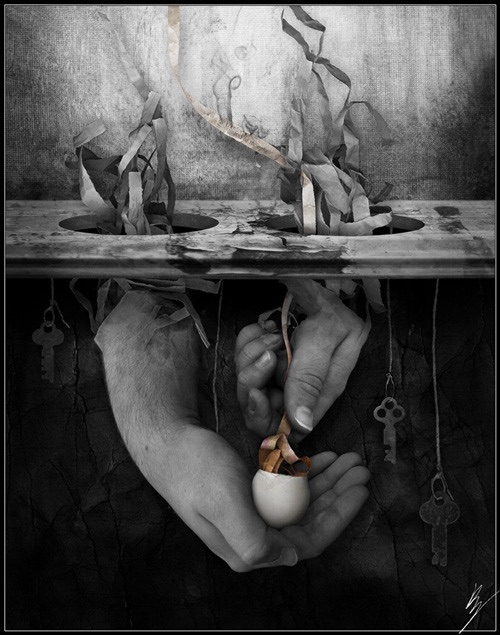
As I sit down to weave this narrative, it dawns upon me that this isn’t just a recollection of someone’s journey, but a poignant reflection on identity, heritage, and the silent erosion of something deeply personal – a mother tongue. This is a tale of gradual loss, one where the once-familiar becomes foreign, and words that once danced on the tip of the tongue begin to slip away into the abyss of forgotten language.
There was someone I knew, someone whose story is etched into the canvas of my memory, a person for whom language was an anchor to their roots. Born and cradled in the warm embrace of a language rich with history and culture, they began their life’s symphony with the melodious sounds of their mother tongue. It was a language that told stories of their ancestors, a language that sang the songs of their land, a language that whispered the secrets of their identity.
But life, as it often does, took them on a journey far from the land where their story began. They found themselves in a place where their mother tongue was not the language of the street signs, the newspapers, or the conversations that buzzed around them. They learned a new language, one that opened doors and built bridges in this unfamiliar territory. As the days turned into months, and months into years, this new language became their new voice.
Slowly, almost imperceptibly, the words of their first language began to fade. At first, it was the complex phrases that tumbled into the shadows, followed by the simpler ones. Words they had once used daily became distant cousins, recognized but no longer intimately known. The lullabies that lulled them to sleep in their childhood became strained melodies that they could no longer easily recall.
With each passing day, speaking their native tongue felt like flipping through the pages of an old book whose words were smudging and vanishing before their eyes. Conversations with family back home became stilted, the fluidity of their speech punctuated by pauses and uncertainties. The cultural tales and idioms that once came naturally to them now required effort to remember, leaving a bittersweet taste of nostalgia and loss.
This person, who once could articulate their deepest thoughts and emotions in the language of their birth, now found themselves grappling for words that seemed to retreat further into the recesses of their memory. It was as if their mother tongue was a kite that had slipped from their hands, soaring away on the winds of change, only visible as a shrinking dot on the horizon of their past.
The realization of this loss brought with it a sense of mourning, for to lose one’s language is to lose a part of oneself. It is to lose the ability to fully inhabit the world of one’s childhood, to express nuances of experience that other languages may not have words for, to feel the full emotional weight of the poetry and songs that once resonated deeply.
Yet, this story is not merely one of loss, but also one of resilience and hope. For in recognizing what was slipping away, this individual began to make a conscious effort to reclaim their mother tongue. They surrounded themselves with the music and literature of their heritage, engaged in conversations, however halting, and embraced the beauty of their language with a renewed sense of purpose. It was a journey back to their roots, an act of defiance against the erosion of identity, and a testament to the enduring power of language.
And so, dear readers, this tale is a reminder to each of us to hold fast to the words that form the bedrock of our being. May we never forget that language is more than a means of communication; it is a vessel for our history, our culture, and our very selves. Let us cherish the tongues we were first given, for they shape the way we view the world, and in them, we find our way home.
Until we meet again in the shared space of stories and remembrances, let us speak, let us remember, and let us celebrate the rich tapestry of language that connects us all.

 Stories From Tina