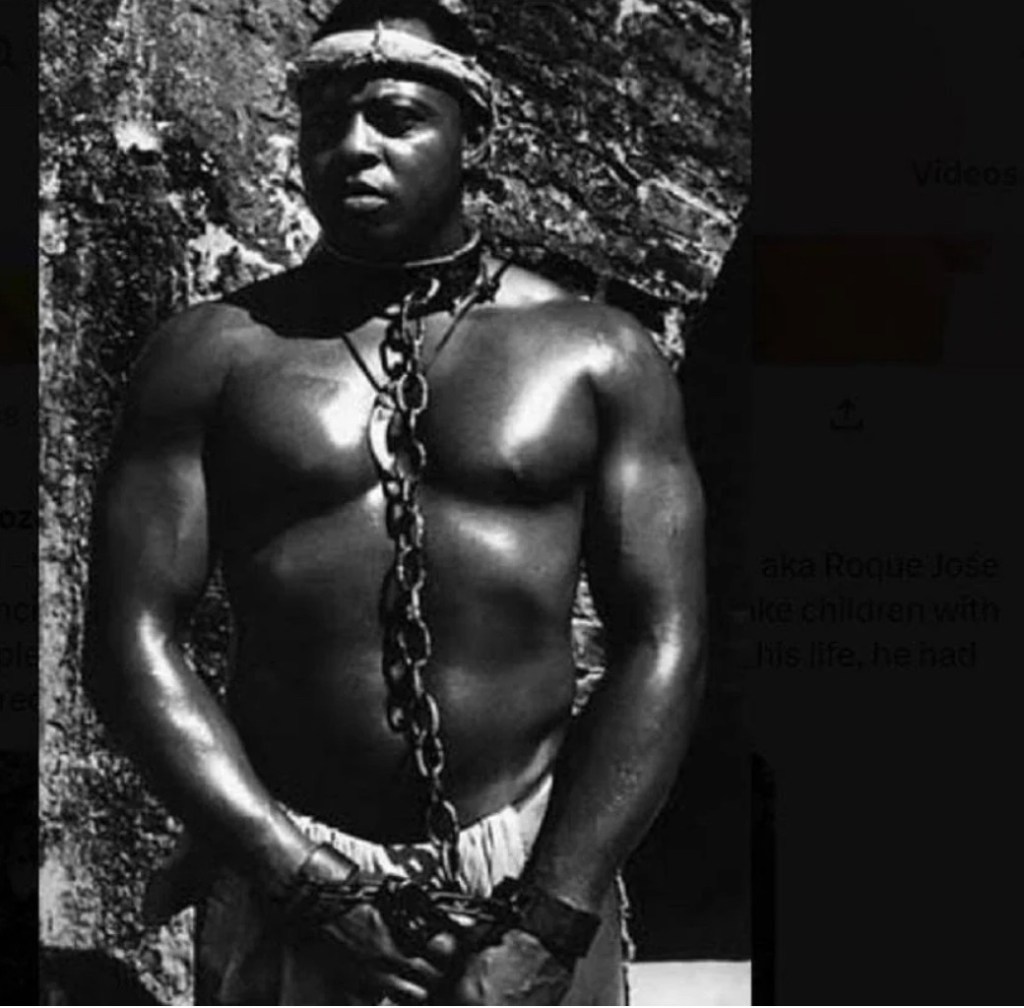
In a world that often prides itself on progress and human rights, it can be jarring to confront the undercurrents of cruelty that persist beneath the surface. The story of Pata Secca is a sobering reminder of the depths of human exploitation. Tina, a diligent writer, has brought to light the harrowing tale of a man who was reduced to a mere breeding tool, forced into fathering over 200 children due to his captors’ desire to exploit his perceived superior genetics. This is the account of Pata Secca’s journey from subjugation to freedom.
Pata Secca, whose real name is shrouded in confidentiality to protect his privacy, was born into a world of anonymity. His parents and his own family remain distant figures, lost in the fog of his past. What is clear, however, is that from an early age, Pata Secca’s life was not his own. He was ensnared by a clandestine network that viewed him as property, not a person.
The discovery of Pata Secca’s plight came about through a series of investigative efforts led by human rights organizations, tipped off by whispers of his existence and the inhumane conditions he endured. After years of being hidden away, Pata Secca was found in a secluded estate, which was nothing short of a sophisticated prison designed to keep him isolated from the world.
The specifics of those who enslaved him are entangled in ongoing legal battles and the pursuit of justice. However, it is known that these individuals were part of a shadowy group seeking to manipulate genetic lineage for their gain. They believed, through a twisted ideology, that Pata Secca possessed unique genetic traits that would produce superior offspring.
Throughout his captivity, Pata Secca fathered over 200 children, his progeny spread across a vast geographical area, serving as living evidence of the atrocities he faced. The number of his grandchildren is even more staggering, a burgeoning legacy of a man whose life was commandeered by others.
Today, Pata Secca’s life is starkly different. Following his rescue, he has been receiving counseling and support to aid in his rehabilitation. The physical and psychological scars of his ordeal run deep, and while freedom is a monumental step, the journey towards healing is long and fraught with challenge.
His current whereabouts are kept confidential to ensure his safety and privacy, but it is known that he has been placed in a secure environment where he can slowly rebuild his life, far from the chains of his past. As for his children, efforts are being made to connect them with their father, though the complexities of such a vast and fragmented family tree are immense.
The organizations involved in Pata Secca’s liberation are also working tirelessly to prevent such inhumane practices from continuing elsewhere. They advocate for stronger regulations and enforcement to combat human trafficking and exploitation.
Pata Secca’s story, as relayed by Tina, is not just a recounting of past horrors; it is a call to action. It is a narrative that demands attention and response, urging society to look closer, to care more, and to never turn a blind eye to the suffering of others.
In the aftermath of his liberation, Pata Secca’s focus is on healing and, to the extent possible, building connections with his offspring. His life, once dictated by the whims of others, is now a testament to the resilience of the human spirit. Pata Secca has embarked on the arduous path of reclaiming his identity, autonomy, and dignity, which were denied to him for so long.
The children and grandchildren of Pata Secca are scattered, their lives shaped by the circumstances of their conception and the varying environments in which they were raised. Some may not yet be aware of their father’s story, while others might be struggling with the implications of their origins. The process of tracing and connecting with these children is painstaking and delicate, as it involves navigating diverse legal and social landscapes.
Tina’s writing highlight the ongoing efforts to provide support to these children, many of whom may need assistance in understanding their heritage and coming to terms with the circumstances of their conception. Support groups and counseling services have been established to help create a sense of community and shared experience among Pata Secca’s descendants.
For Pata Secca himself, the future is uncertain but holds a glimmer of hope. While he may never be able to undo the past, he is learning to live in the present. With the help of therapists and support workers, he is exploring new interests, developing hobbies, and even considering educational opportunities that were once unimaginable for him. The aim is not just to survive but to thrive—to find joy, purpose, and meaning in a life that was once devoid of choice.
As for the broader implications of Pata Secca’s ordeal, Tina’s storytelling serves as a stark reminder of the hidden atrocities that can lurk behind closed doors. The need for vigilance and advocacy in the fight against modern-day slavery and human trafficking has never been clearer. Pata Secca’s story has become a rallying cry for those committed to upholding human dignity and ensuring that such abuses are brought into the light and met with justice.
In the end, Pata Secca’s legacy is not defined by the suffering he endured but by the courage he demonstrates in forging a new path for himself and others. His life is a mosaic of sorrow and strength, despair and determination. It is a life that continues to unfold, with each day offering a chance to write a new chapter—one that speaks not of victimhood, but of survival and the unyielding power of the human will.
Through the diligent work of writers like Tina and the countless advocates for human rights, Pata Secca’s story will not be forgotten. It is enshrined in the annals of cautionary tales, a narrative that will continue to educate, inspire, and ignite a collective commitment to a world where freedom and respect for all individuals reign supreme.

 Stories From Tina